
I told you I would write to you from the other side of the water. I am home now, which means I have crossed it — and I want to tell you what I found there, because it was not what I went looking for. It rarely is.
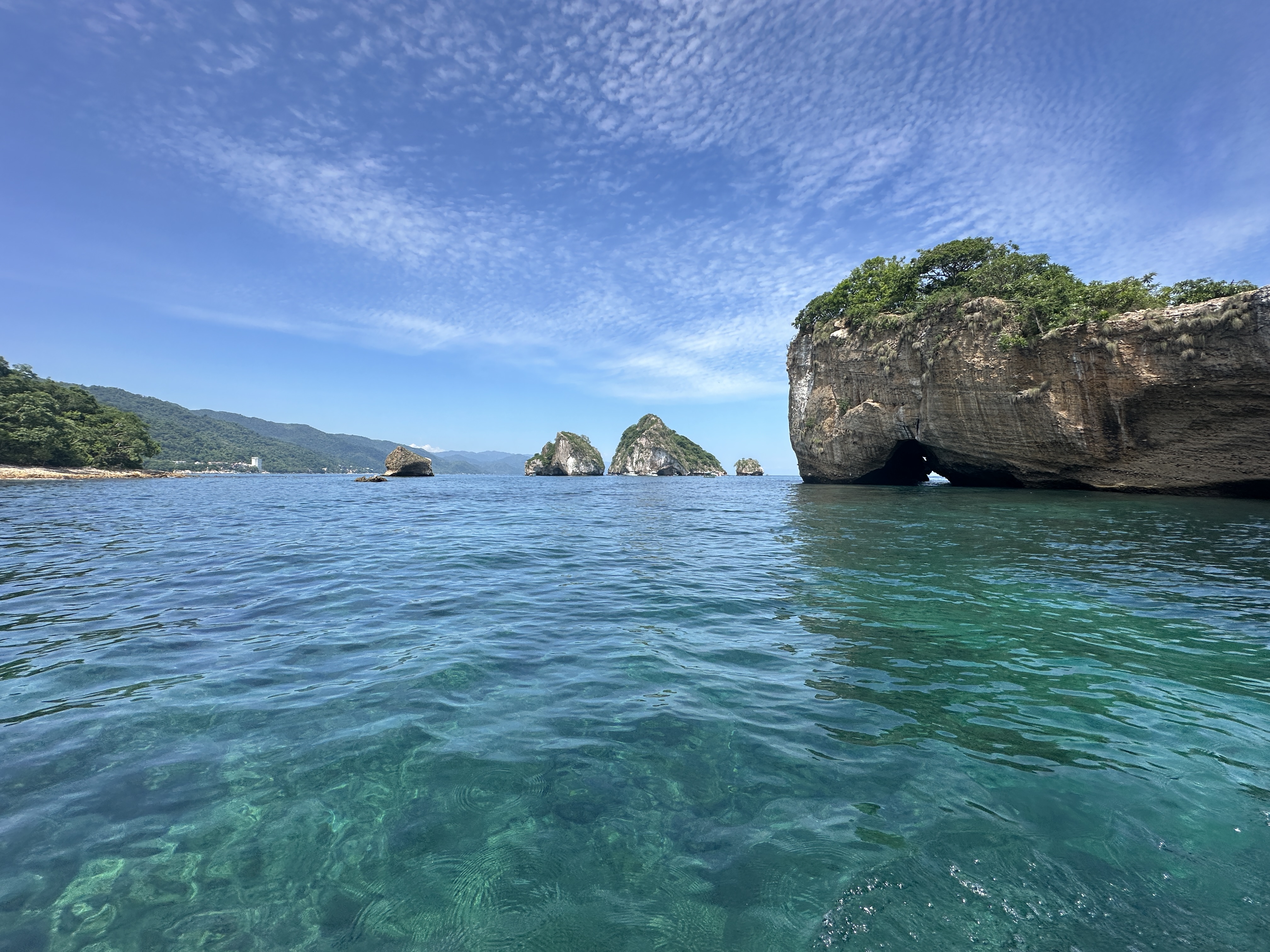
For years I lived in Puerto Vallarta through the summers and into the fall. From my home I could see Los Arcos — the great stone arches rising out of the bay, close enough to point at, far enough that I never went. Season after season I looked at them from a distance and told myself I would go. I never did. You know how that is. The thing you can see from your own window, that you never quite arrive at.
This trip, I went.
I will not be able to make you feel it in words, but I will try. The water at Los Arcos was so clear I could see twenty-five feet down to the ocean floor — every fish, every shift of light, the whole living world of it laid open beneath me. You can only reach Los Arcos by boat; it is a nature preserve, and you swim only in the stretch they allow. I have swum my whole life. I have never felt what I felt there. I was not visiting the ocean. I was inside it, part of it, no edge between me and the water. I spent only a couple of hours snorkeling and swimming, and in those hours something I had been holding without knowing it simply let go. Floating there, I heard myself sigh. I heard myself breathe. Some release does not come from effort. It comes from finally stopping the grip.
Here is the thing I did not expect. As I floated on my back through the arches of Los Arcos, I looked up — and there, cascading down the cliffs above me out of the cactus, was pitaya. My favorite fruit in the world. I know this fruit. I have loved it since I was a child, because it grew in the desert near Lajitas and Alpine, in the Big Bend country of far southwest Texas, where my grandparents lived. I thought it belonged to that desert. I thought it was theirs — a thing of my roots, my grandparents, the dry Texas ground I come from. And there it was, growing wild high on a sea cliff in Mexico, thousands of miles from where I first tasted it.
What roots you does not stay where you left it. It travels ahead and waits for you to arrive.
And then, because my spirit has never once known how to sit still, they brought me back by panga to Mismaloya. There is a pier there now — two years ago it was jagged leftover concrete from an old dock, and this trip I walked out onto a beautiful new one. I swam to the cliff, climbed it, and jumped — twenty-five feet down into the deep blue, then back to shore. I am telling you this not to sound brave but because it is true, and because that is the exact edge where I feel most like myself: the moment before the jump, when the only thing left to do is trust the water. I have spent a life learning to trust the water.
That is what these places do to me, and it is why I keep returning. Days later, in Valle de Guadalupe, I understood the other half of it. The Valle is somewhere that should not be possible — the desert of my Texas childhood, the mountains and vineyards of Southern California, and the Mexico that holds my soul, all gathered into one geography. I can stand among the vines and be at the ocean in twenty-five minutes. Mountains, desert, vineyard, sea — the whole map of everything that has ever formed me, held within minutes of itself. There is work becoming in the Valle, quietly, and I am watching it take the time it needs to take. But I will not narrate a thing before it is ready. Some things are still becoming.
What I did not understand until this trip is that I do not have one soul place. I have a constellation of them, and they are not in competition. The vine taught me to stay. The sea taught me to let go. And the pitaya on the cliff taught me the thing underneath both: that staying and leaving are not opposites, that what is truly yours will find you wherever you go, because it is not tied to a place — it is tied to you.
I have been back in Texas only a few days, and I can already feel the pull. Not restlessness. Recognition. My body knows there are warm waters that cleanse something in me that dry ground cannot reach, and it is already asking to return. I have stopped arguing with that pull. I have learned it is not indulgence. It is my soul keeping its own calendar.
I came home with more conviction than I left with. Not more rest — I did not go to rest. I went to remember, and I did. The woman who crossed the water and the woman who came back are the same woman, more herself. That is the only souvenir worth carrying.
If there is a place you can see from your own window that you have never gone to — go. What is meant for you does not run. It aligns. And sometimes it has been waiting, this whole time, twenty-five feet down and clear all the way to the bottom.
Be humble and kind, Lisa Leyva